Acoustic Staging & Mics
Positional audio cues rely on clean phase alignment between left and right drivers rather than virtual 7.1 DSP sliders. We compare open-back studio cans and low-latency wireless planar headsets.
Compare Audio Specs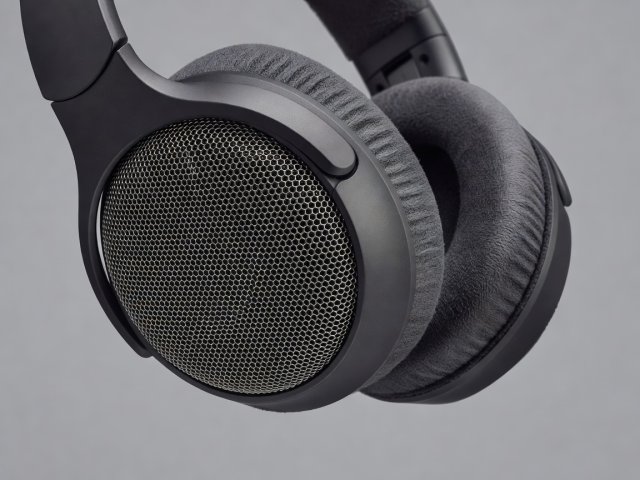
Imaging vs Bass Masking
A large share of closed-back gaming headsets boost 100 Hz to 180 Hz by 6 dB to 9 dB to dramatize gunfire. During multi-player firefights, that mid-bass overhang masks subtle cloth rustle and reload clicks sitting between 2 kHz and 4.5 kHz.
Open-back dynamic designs like the Sennheiser HD 560S and Beyerdynamic DT 900 Pro X avoid standing acoustic waves inside the cup. Their angled drivers beam directly toward the pinna, preserving phase consistency so stereo pan cues map cleanly to horizontal angles without synthetic reverb.
Measured Audio Matrix
Channel matching within 1.5 dB across 100 Hz to 8 kHz is essential for accurate directional localization; units exceeding 3 dB skew pull phantom center cues off target.
| Model | Cup / Driver | Impedance | Audio Latency | Cable / Pad Swap |
|---|---|---|---|---|
| Sennheiser HD 560S | Open-Back Dynamic | 120 ohm | 0.0 ms (Analog) | Twist-lock 2.5 mm / Snap pads |
| Beyerdynamic DT 900 Pro X | Open-Back STELLAR.45 | 48 ohm | 0.0 ms (Analog) | Mini-XLR / Clip-ring pads |
| Audeze Maxwell | Closed 90 mm Planar | Active DSP | 14.2 ms (2.4 GHz) | USB-C + 3.5 mm / Twist pads |
| Logitech G Pro X 2 | Closed Graphene 50 mm | Active DSP | 16.8 ms (Lightspeed) | Detachable boom / Lip-slip pads |
Boom Mic Rejection
Wireless headsets compress uplink voice audio to preserve 2.4 GHz bandwidth for stereo playback. Even clean boom capsules clip nasal transients when sampled at 16 kHz. If squad comms or recording clarity matter, pairing an open-back analog headphone with a desk-mounted dynamic USB microphone (or an inline V-MODA BoomPro on 3.5 mm jacks) preserves full 48 kHz vocal range and rejects mechanical keyboard clatter behind the cardioid null.
Earpad & Cable Service
Protein-leather pads peel within 18 months of skin-oil exposure. Look for headsets using standard snap-ring velour pads and detachable mini-XLR or 3.5 mm cables rather than glued foam rings or hardwired braided leads that fail at the strain relief.